THE SEVEN FEASTS
What national festivals do you celebrate? Easter, Christmas and New Year? If you're reading this, you probably recognise Pentecost and have a nice Harvest service in the autumn. If you were born in Israel 3,000 years ago, you would be required to celebrate these 7 feasts. All found in Leviticus 23.
The Lord spoke to Moses, saying, 2 “Speak to the people of Israel and say to them, These are the appointed feasts of the Lord that you shall proclaim as holy convocations; they are my appointed feasts.”
There is more to these feasts than an ancient ceremony no longer relevant to the Christians of today. The meanings of each of them is carefully crafted.
Therefore let no one pass judgment on you in questions of food and drink, or with regard to a festival or a new moon or a Sabbath.
Colossians 2:16
Now, I'm not telling you to observe them. Those days have passed, but if you understand them it might give you a better perspective on what Jesus Christ came to do.
Then he said to them, “These are my words that I spoke to you while I was still with you, that everything written about me in the Law of Moses and the Prophets and the Psalms must be fulfilled.”
Luke 24:44
Jesus came to fulfil the whole of the Law, and to do that, he has to fulfil these feasts as well.
Before we start, I want you to know how the year is laid out. The feasts start in the Spring and end in the Autumn.
Three occur over Easter, the fourth 50 days later on Pentecost, and the final 3 are clustered together in the fall once the harvest is largely over.
They cover the 7 most fruitful months of the year. There are 12 or sometimes 13 months in a year. Which reflects the tribes of Isreal, as Joseph recieves a double inhiretence with his 2 son Ephraim & Manasseh, adding an extra tribe in some of the lists (Numbers 2 is an example of the bakers dozen).
| NISAN | IYAR | SIVAN | TAMUZ | AV | ELUL | TISHREI |
| 1 | 2 | 3 | 4 | 5 | 6 | 7 |
| Barley Harvest | Barley & Wheat Harvest | Wheat Harvest | Vines Harvest | Vines Harvest | Vines & Oil Harvest | Vines & Oil Harvest |
| Passover, Unleavened Bread, First Fruits |
Feast Of Weeks | Trumpets, Day of Atonement, Tabernacles |
3 “Six days shall work be done, but on the seventh day is a Sabbath of solemn rest, a holy convocation. You shall do no work. It is a Sabbath to the Lord in all your dwelling places.”
The Sabbath is not one of the 7 annual Feasts, but it is a weekly observancy. Starting at sunset on Friday and continues to Saturday evening at twilight. Its a day to worship the Lord and rest from all work.
| SUN | MON | TUE | WED | THU | FRI | SAT |
| 1 | 2 | 3 | 4 | 5 | 6 | 7 |
| Work | Work | Work | Work | Work | Work | Rest |
So then, there remains a Sabbath rest for the people of God,
Hebrews 4:9
When Jesus returns there will be a rest for God’s people. So even if were not celebrating it now, we will be.
For in six days the Lord made the heavens and the earth, the sea, and all that is in them, and rested on the seventh day. Therefore the Lord blessed the Sabbath day and made it holy.
Exodus 20:11
The pattern of resting one day in seven is set from the beginning of creation.
“For the Son of Man is lord of the Sabbath.”
Matthew 12:8
Jesus did many miracles on this day, and was referred to as Lord of the Sabbath.
4“These are the appointed feasts of the Lord, the holy convocations, which you shall proclaim at the time appointed for them. 5 In the first month, on the fourteenth day of the month at twilight, is the Lord's Passover."
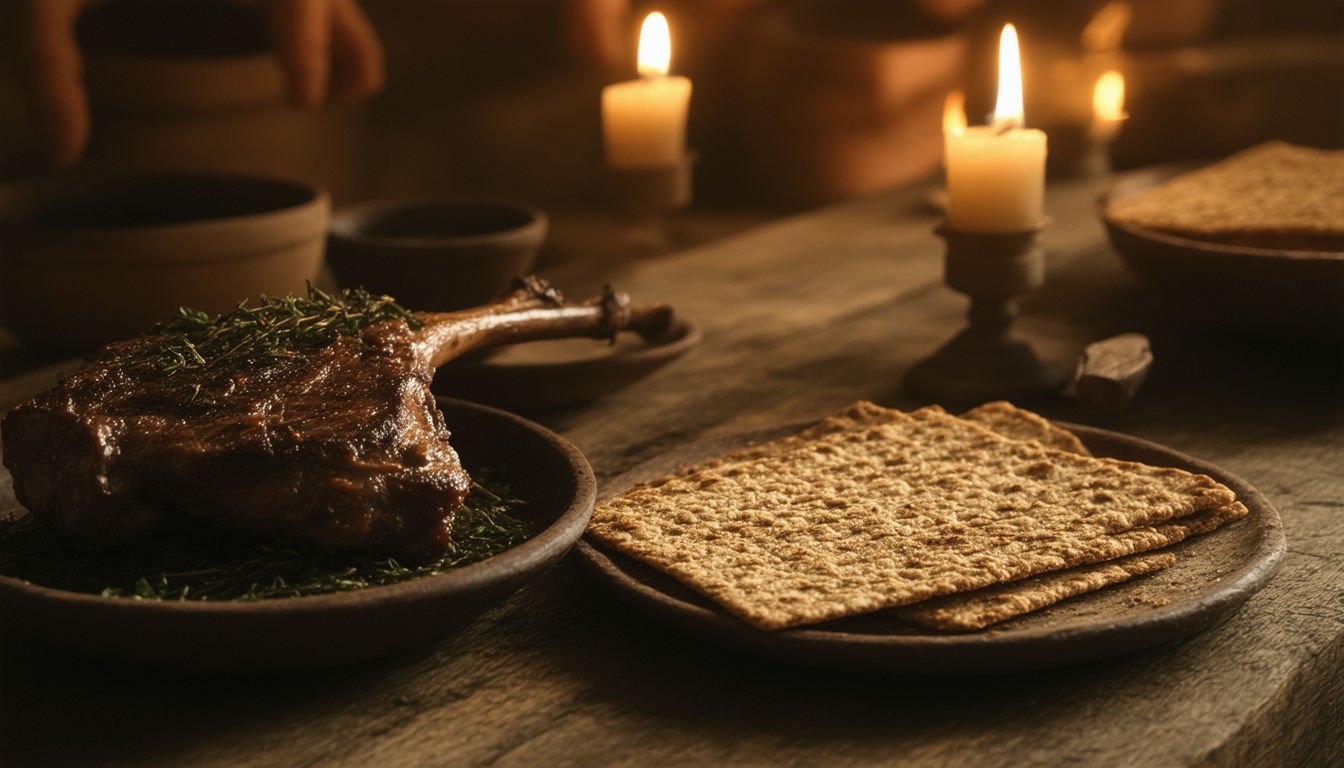
A bit of back story on the Hebrew Calender. Each month starts with a new moon, ending when the next new moon is sighted. The Passover night is a full moon as it happens in the middle of the month. Because the number of new moons in a year vary, the passover moves against the grecian date. Normally it occurs on the first full moon after the Spring Equinox.
| HEBREW MONTH | ||||
New Moon  |
First Quarter  |
Full Moon  |
Third Quarter  |
No Moon  |
| Day 1 | Day 8 | Day 15 | Day 22 | Ends Day 29/30 |
you shall say, ‘It is the sacrifice of the Lord's Passover, for he passed over the houses of the people of Israel in Egypt, when he struck the Egyptians but spared our houses.’” And the people bowed their heads and worshiped.
Exodus 12:27
The Passover is a meal to commemorate the Escape from Egypt. The meal saved them from the last plague, the death of the firstborn. They had to sacrifice a lamb, eat it and use the blood to mark their houses. Now this is replayed each year.
Cleanse out the old leaven that you may be a new lump, as you really are unleavened. For Christ, our Passover lamb, has been sacrificed.
1 Corinthians 5:7
Christ is called the Lamb of God, for God did not spare his son. Jesus was killed for his people, so we would not taste the second death (being thrown into hell). It's likely he died the afternoon before the Passover was eaten. The passover lambs would have also been slaughtered on that same day.
27 And he took a cup, and when he had given thanks he gave it to them, saying, “Drink of it, all of you, 28 for this is my blood of the covenant, which is poured out for many for the forgiveness of sins. 29 I tell you I will not drink again of this fruit of the vine until that day when I drink it new with you in my Father's kingdom.”
Matthew 26:27-29
The evening before he died, he set up the Lord’s Supper. The meal was to remember his death on the cross. The wine was symbolic of his blood, which covered his followers' sins. Just as the passover lambs blood was used to protect the Israelites from God’s judgement.
6 "And on the fifteenth day of the same month is the Feast of Unleavened Bread to the Lord; for seven days you shall eat unleavened bread. 7 On the first day you shall have a holy convocation; you shall not do any ordinary work. 8 But you shall present a food offering to the Lord for seven days. On the seventh day is a holy convocation; you shall not do any ordinary work.”
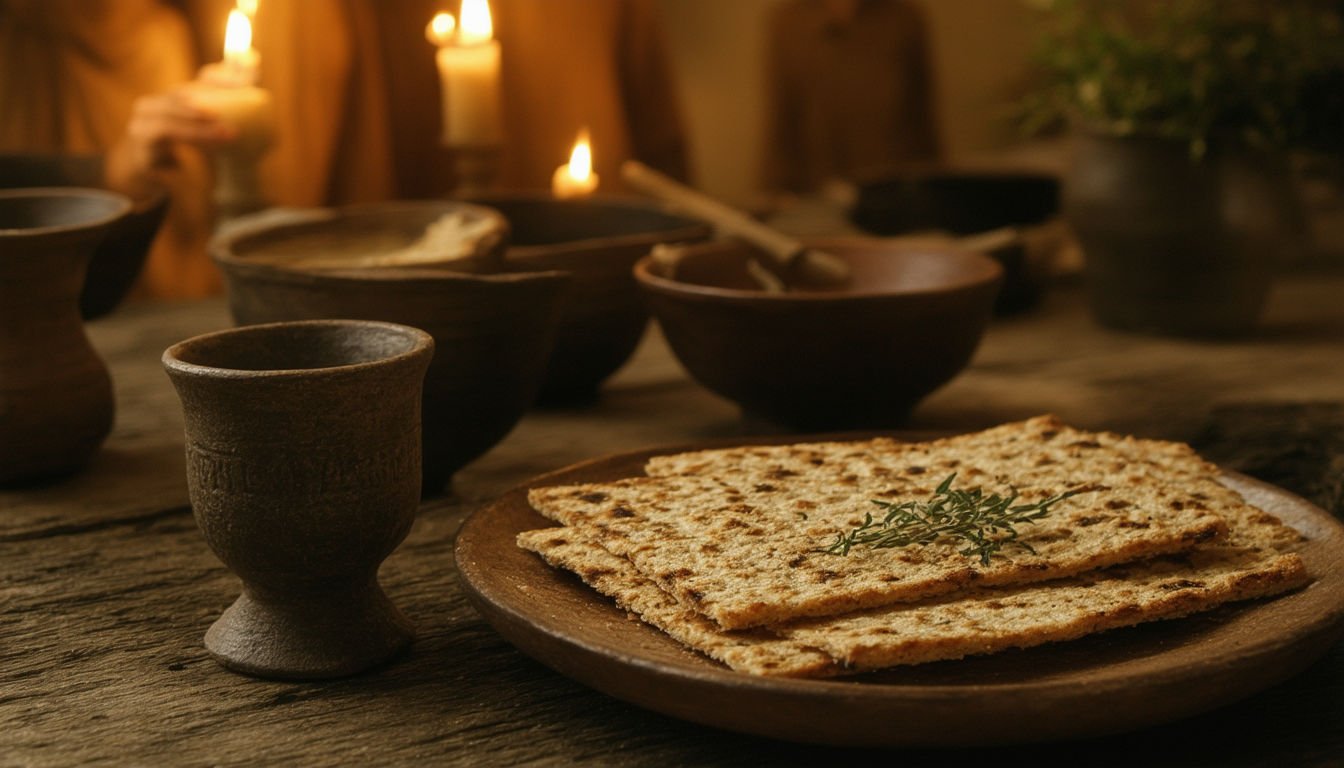
The Feast of Unleavened Bread starts at the same time as the Passover. Bread was served with the meal without yeast, because they were rushing to leave Egypt and could not wait for the dough to rise.
Now as they were eating, Jesus took bread, and after blessing it broke it and gave it to the disciples, and said, “Take, eat; this is my body.”
Matthew 26:26
The bread in the last supper was symbolic of Jesus’s body.
In remembrance of the fact he died and lied in the grave.
We eat it to remember his sacrifice, and how it allows us to escape the coming punishment.
Just as the Hebrews ate their bread as they escaped Egypt.
There is also symbolism in the fact the bread did not rise, for Jesus did not rise immediately, he rose on the third day.
Our fellow Christians will not rise from the dead till Jesus returns.
9 And the Lord spoke to Moses, saying, 10 “Speak to the people of Israel and say to them, When you come into the land that I give you and reap its harvest, you shall bring the sheaf of the firstfruits of your harvest to the priest, 11 and he shall wave the sheaf before the Lord, so that you may be accepted. On the day after the Sabbath the priest shall wave it. 12 And on the day when you wave the sheaf, you shall offer a male lamb a year old without blemish as a burnt offering to the Lord. 13 And the grain offering with it shall be two tenths of an ephah of fine flour mixed with oil, a food offering to the Lord with a pleasing aroma, and the drink offering with it shall be of wine, a fourth of a hin. 14 And you shall eat neither bread nor grain parched or fresh until this same day, until you have brought the offering of your God: it is a statute forever throughout your generations in all your dwellings.
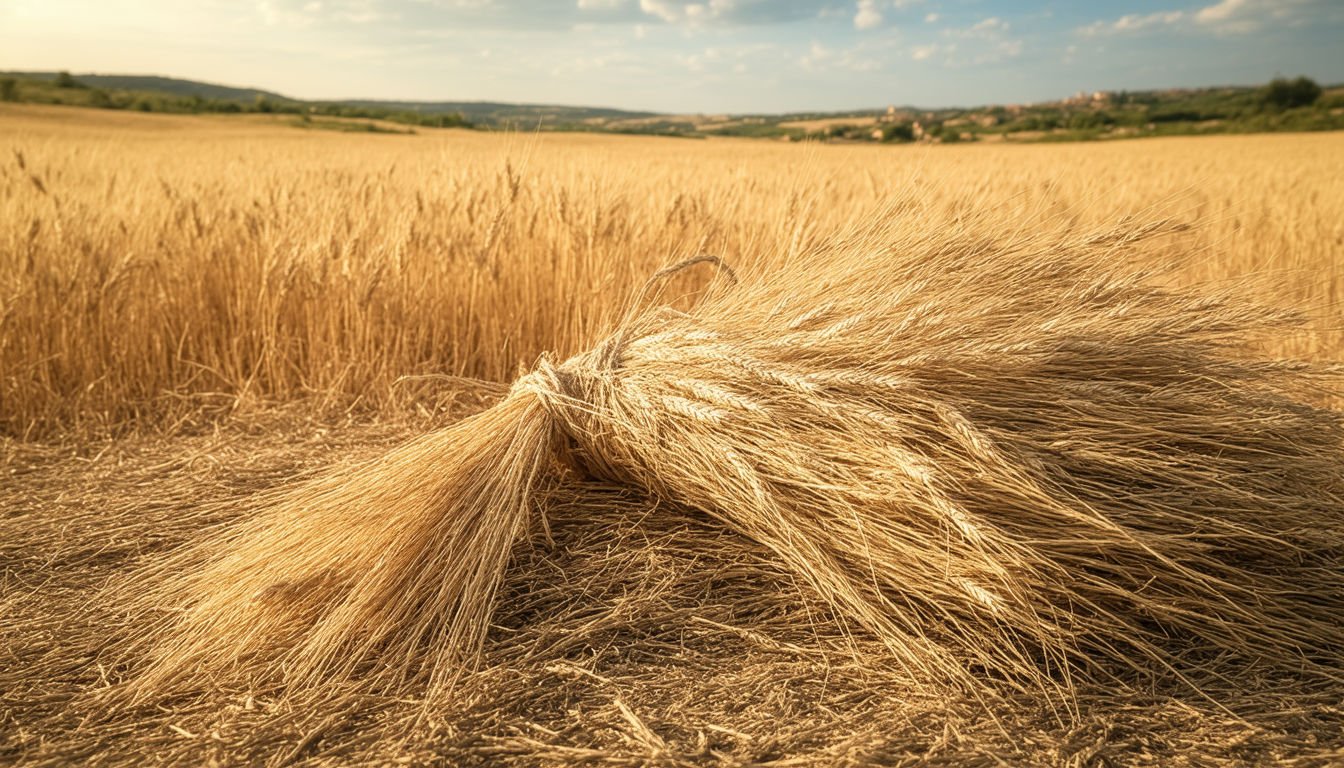
The Feast of First Fruits is a biblical festival observed on the Sunday following the Passover. This was the day Jesus rose from the dead, its Easter Sunday. It marked the beginning of the harvest season. The Israelites would bring the first sheaf of their barley harvest as an offering to God.
For as in Adam all die, so also in Christ shall all be made alive.
23 But each in his own order: Christ the firstfruits, then at his coming those who belong to Christ.
1 Corinthians 15:22-23
Christ, having been raised first, is called the firstfruits; all the Christians will be raised with him at his return. They will make up the rest of the harvest of all those saved by his sacrifice.
Now after the Sabbath, toward the dawn of the first day of the week, Mary Magdalene and the other Mary went to see the tomb. 2 And behold, there was a great earthquake, for an angel of the Lord descended from heaven and came and rolled back the stone and sat on it. 3 His appearance was like lightning, and his clothing white as snow. 4And for fear of him the guards trembled and became like dead men. 5 But the angel said to the women, “Do not be afraid, for I know that you seek Jesus who was crucified. 6 He is not here, for he has risen, as he said. Come, see the place where he lay.
Matthew 28:1-6
Christ is now raised and in Heaven. Although for the next 40 days after the feast of First Fruits he appears to his followers on Earth in physical form.
15 “You shall count seven full weeks from the day after the Sabbath, from the day that you brought the sheaf of the wave offering. 16 You shall count fifty days to the day after the seventh Sabbath. Then you shall present a grain offering of new grain to the Lord.
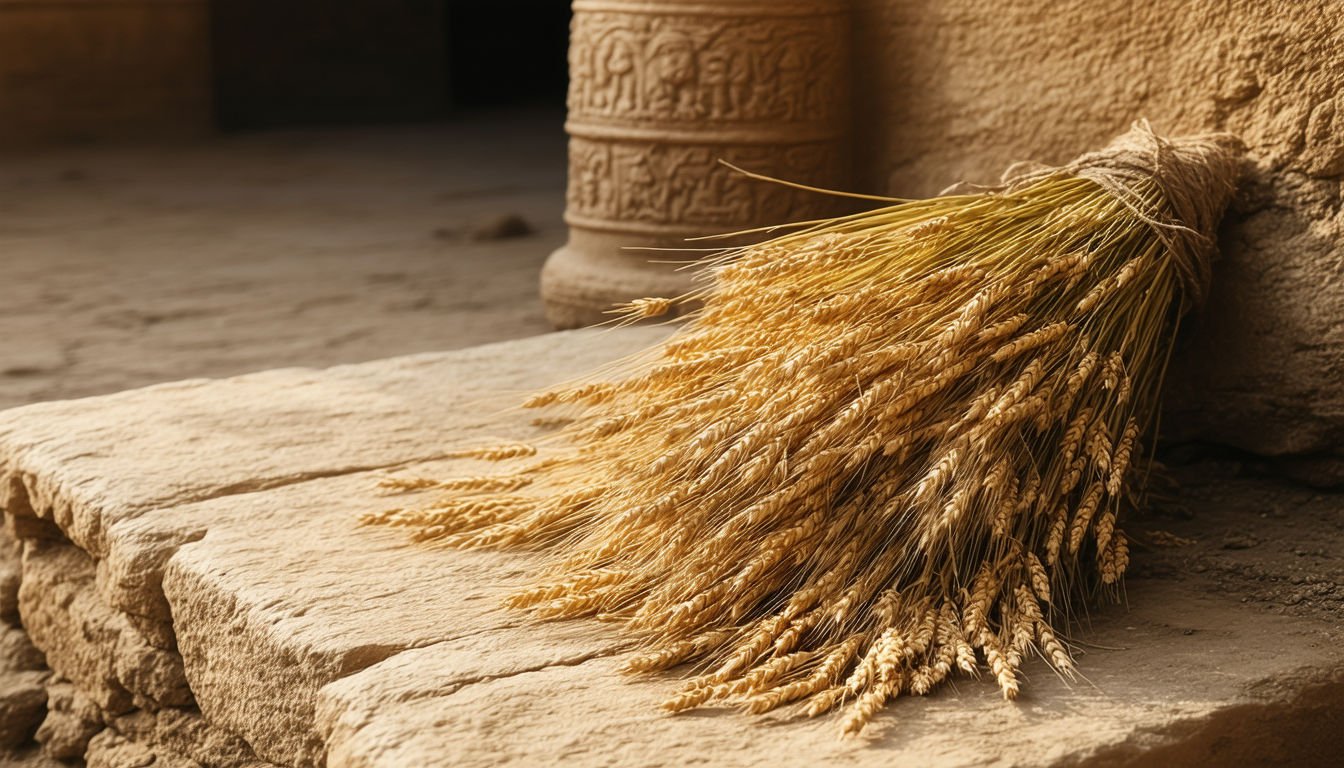
The fourth festival of the year happens 49 days after the day of first fruits.
The reason its called the festival of weeks is because its occurs seven weeks after the last festival.
7 days times 7 weeks equals 49 days, then the next day the festival starts, day 50.
The Jewish people call it Shavuot. You will know it as Pentecost, which literally means fifty.
| PENTECOST | ||||||
| SUN | MON | TUE | WED | THU | FRI | SAT |
| First Fruits | 2 | 3 | 4 | 5 | 6 | 7 |
| 8 | 9 | 10 | 11 | 12 | 13 | 14 |
| 15 | 16 | 17 | 18 | 19 | 20 | 21 |
| 22 | 23 | 24 | 25 | 26 | 27 | 28 |
| 29 | 30 | 31 | 32 | 33 | 34 | 35 |
| 36 | 37 | 38 | 39 | 40 | 41 | 42 |
| 43 | 44 | 45 | 46 | 47 | 48 | 49 |
| Feast of Weeks | 7 Weeks + 1 Day = 50 Days | |||||
17 You shall bring from your dwelling places two loaves of bread to be waved, made of two tenths of an ephah. They shall be of fine flour, and they shall be baked with leaven, as firstfruits to the Lord. 18 And you shall present with the bread seven lambs a year old without blemish, and one bull from the herd and two rams. They shall be a burnt offering to the Lord, with their grain offering and their drink offerings, a food offering with a pleasing aroma to the Lord. 19 And you shall offer one male goat for a sin offering, and two male lambs a year old as a sacrifice of peace offerings.
For the Israelites they were required to observe the day with sacrifices in the Temple.
20 And the priest shall wave them with the bread of the firstfruits as a wave offering before the Lord, with the two lambs. They shall be holy to the Lord for the priest.
The First Fruits here is referring to the next harvest, by now the Wheat crop was ready. The previous First Fruits feastival was the barley harvest.
21 And you shall make a proclamation on the same day. You shall hold a holy convocation. You shall not do any ordinary work. It is a statute forever in all your dwelling places throughout your generations. 22 “And when you reap the harvest of your land, you shall not reap your field right up to its edge, nor shall you gather the gleanings after your harvest. You shall leave them for the poor and for the sojourner: I am the Lord your God.”
They were also required to rest from most of their work. It was a really special day for the Israelites.
When the day of Pentecost arrived, they were all together in one place. 2 And suddenly there came from heaven a sound like a mighty rushing wind, and it filled the entire house where they were sitting. 3 And divided tongues as of fire appeared to them and rested on each one of them. 4 And they were all filled with the Holy Spirit and began to speak in other tongues as the Spirit gave them utterance.
Acts 2:1-4
For Christians its the day we get the Holy Spirit.
Its the day the Harvest of souls really starts. The message is now going out to all nations.
We know that because the Apostles were speaking in other languages, and because Jesus had told them to go out to all the world.
3,000 people were added to their number that day.
It was really like a second harvest starting.
Christians are that harvest of Wheat, and its still being harvested to this day.
It will not stop until every tribe and tongue is gathered from the four corners of the Earth, and every one of the elect is secured.
On the third new moon after the people of Israel had gone out of the land of Egypt, on that day they came into the wilderness of Sinai
Exodus 19:1
It is widely believed by the Jews that the Lord decended on Mount Sinai at Pentecost. We can see from the verse above it would have certainly been within a few days (if we take this first new moon to be the month of Nisan).
The Hebrews struggled to obey the Law that was given to them on the mountain, because their hearts were far from truly serving the Lord.
As Christians, we recognise that we cannot save ourselves, we need a new nature. The Holy Spirit comes to convict us of sin and to direct our hearts toward God.
23 And the Lord spoke to Moses, saying,
24 “Speak to the people of Israel, saying, In the seventh month, on the first day of the month, you shall observe a day of solemn rest, a memorial proclaimed with blast of trumpets, a holy convocation.
25 You shall not do any ordinary work, and you shall present a food offering to the Lord.”
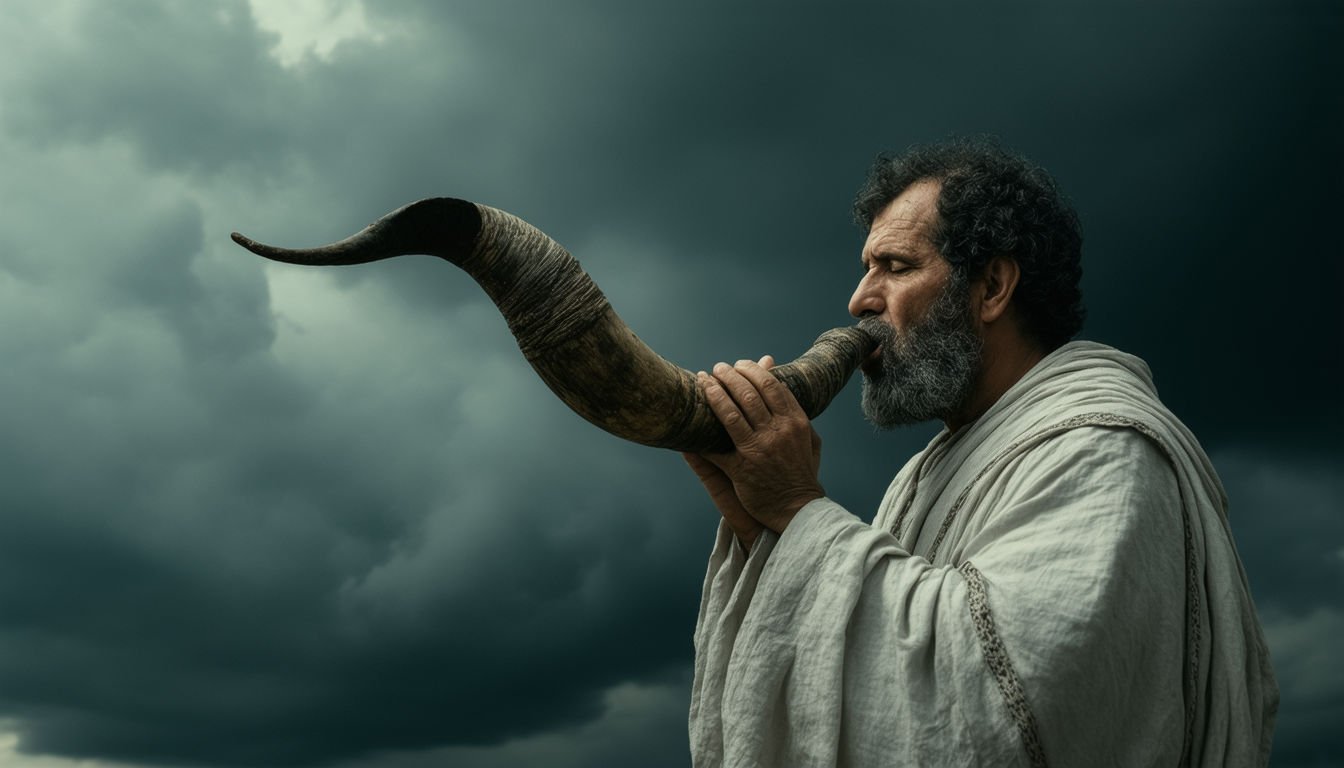
Happy New Year! Trumpets marks the start of the year. Technically, it falls in the seventh month today, but before the Exodus it was viewed as the beginning of the year. Confusing, but remember: our calendar has oddities too—New Year’s starts in January, the tax year begins in April, and the school year starts in September.
Jewish Idiom - "The Day and the Hour No Man Knows"
Rosh Hashanah "Day of Trumpets"
A.K.A - Yom HaKeseh - "The Hidden Day"
The Day of Trumpets is the only festival that begins on the first day of the month.
Since a Hebrew month starts with the new moon, they didn’t calculate the date in advance—they had to witness the first crescent moon when it appeared.
If the sky was cloudy and it couldn’t be seen, the new month wouldn’t begin until the next day.
That’s why people would say “no one knows the day or the hour,” because the exact start of the festival depended on when the new moon was actually sighted.
Blow the trumpet at the new moon, at the full moon, on our feast day.
Psalm 81:3
The trumpets are blown to start the new year and lead into the solemn autumn feasts, notably the Day Of Atonement.
“But concerning that day and hour no one knows, not even the angels of heaven, nor the Son, but the Father only."
Matthew 24:36
Jesus possibly alludes to the day of Trumpets when he talks about the End Times.
On the morning of the third day there were thunders and lightnings and a thick cloud on the mountain and a very loud trumpet blast, so that all the people in the camp trembled.
Exodus 19:16
When God descends on Mount Sinai to give Moses the Law. We hear trumpets announcing his arrival.
For the Lord himself will descend from heaven with a cry of command, with the voice of an archangel, and with the sound of the trumpet of God. And the dead in Christ will rise first.
1 Thessalonians 4:16
Just as when Jesus returns the dead rise at the sound of the Trumpets!
26 And the Lord spoke to Moses, saying, 27 “Now on the tenth day of this seventh month is the Day of Atonement. It shall be for you a time of holy convocation, and you shall afflict yourselves and present a food offering to the Lord. 28 And you shall not do any work on that very day, for it is a Day of Atonement, to make atonement for you before the Lord your God.
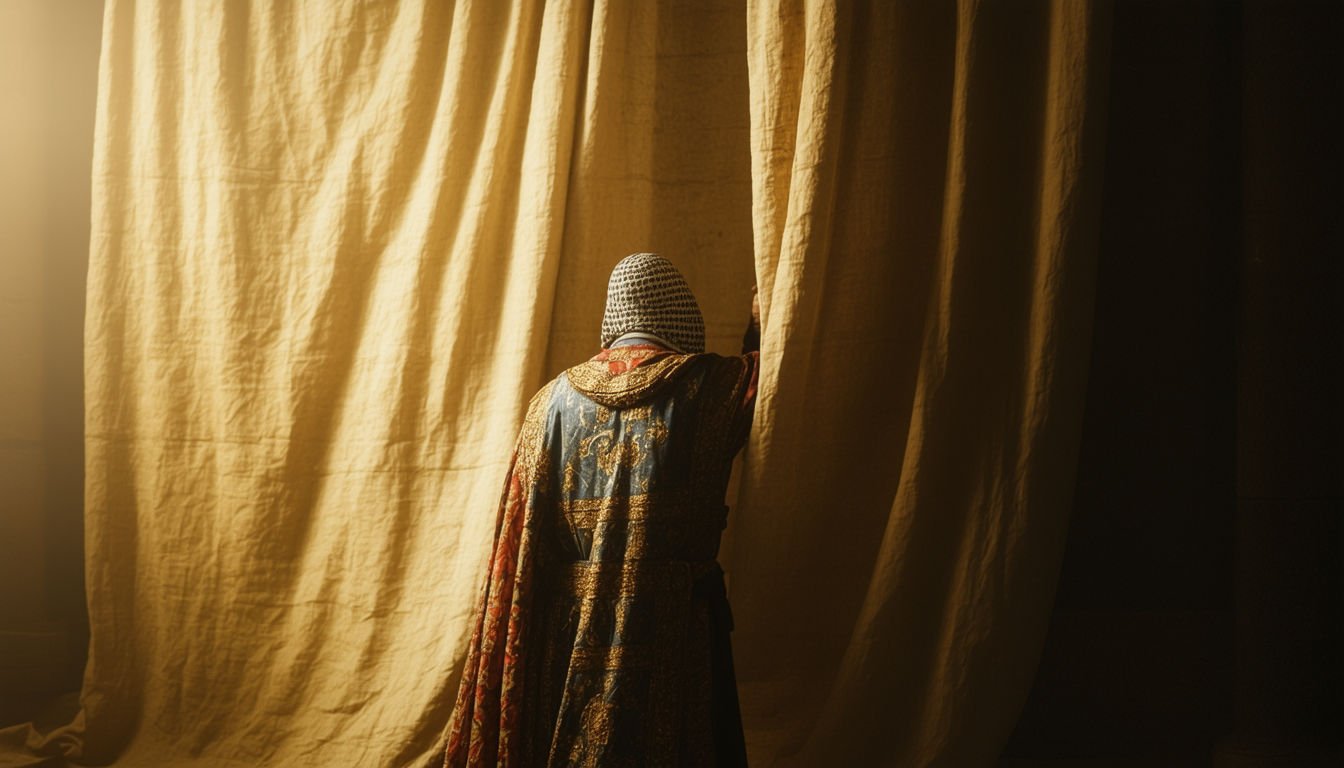
The Day of Atonement is a day on which you must not do any work, for it is extremely important. It is the only other day besides the Sabbath where you abstain from all labour, and it occurs ten days after the Feast of Trumpets.
| TISHREI | ||||||
| 15 Trumpets (Some Rest) |
2 | 3 | 4 | 5 | 6 | 7 |
| 8 | 9 | 10 Atonement (Full Rest) |
11 | 12 | 13 | 14 |
| 15 Tabernacles 1 (Solemn Rest) |
16 Tabernacles 2 |
17 Tabernacles 3 |
18 Tabernacles 4 |
19 Tabernacles 5 |
20 Tabernacles 6 |
21 Tabernacles 7 |
| 22 Tabernacles 8 (Solemn Rest) |
23 | 24 | 25 | 26 | 27 | 28 |
29 For whoever is not afflicted on that very day shall be cut off from his people.
Here, “afflicted” means to fast from food and water in order to draw closer to God.
30 And whoever does any work on that very day, that person I will destroy from among his people. 31 You shall not do any work. It is a statute forever throughout your generations in all your dwelling places. 32 It shall be to you a Sabbath of solemn rest, and you shall afflict yourselves. On the ninth day of the month beginning at evening, from evening to evening shall you keep your Sabbath.”
The concept of rest and the Sabbath arises again here, as this is the only other day that brings God’s rest.
6 “Aaron shall offer the bull as a sin offering for himself and shall make atonement for himself and for his house. 7 Then he shall take the two goats and set them before the Lord at the entrance of the tent of meeting.
8 And Aaron shall cast lots over the two goats, one lot for the Lord and the other lot for Azazel. 9 And Aaron shall present the goat on which the lot fell for the Lord and use it as a sin offering, 10 but the goat on which the lot fell for Azazel shall be presented alive before the Lord to make atonement over it, that it may be sent away into the wilderness to Azazel.
Leviticus 16:6-10
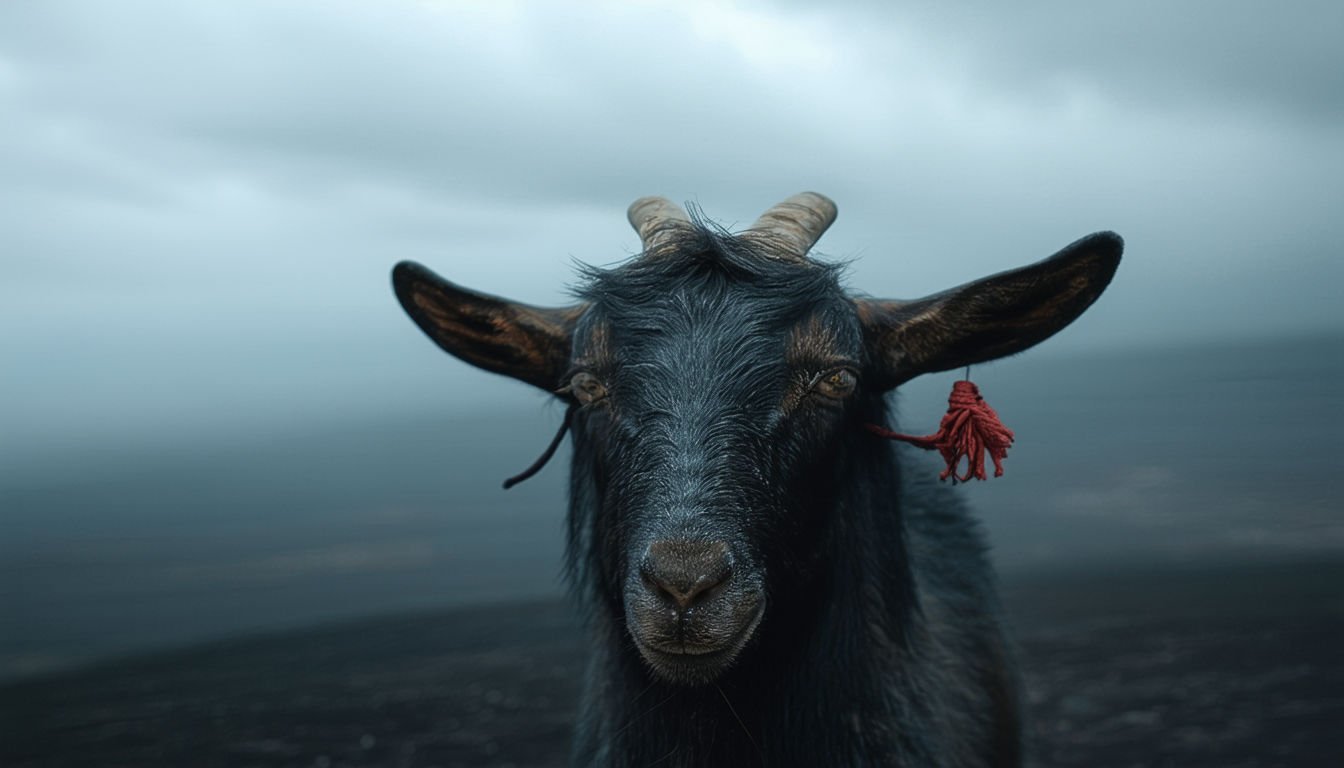
Two goats are selected: one is killed as an offering to the Lord, and the other is sent away into the wilderness.
Azazel may refer to a demon, a rocky cliff where the goat was cast down, or possibly both—it is not entirely clear.
However, there is certainly something sinister associated with the other goat.
15 “Then he shall kill the goat of the sin offering that is for the people and bring its blood inside the veil and do with its blood as he did with the blood of the bull, sprinkling it over the mercy seat and in front of the mercy seat. 16Thus he shall make atonement for the Holy Place, because of the uncleannesses of the people of Israel and because of their transgressions, all their sins. And so he shall do for the tent of meeting, which dwells with them in the midst of their uncleannesses.
Leviticus 16:15-16
The goat is killed, and its blood is sprinkled on the Mercy Seat of the Ark of the Covenant—the place where God appears above. This is the only time of the year that a priest may enter the Most Holy Place in the Tabernacle (later Temple). It is done to cleanse the people and make them right with God.
39But you have a custom that I should release one man for you at the Passover. So do you want me to release to you the King of the Jews?” 40 They cried out again, “Not this man, but Barabbas!” Now Barabbas was a robber.
John 18:39-40
A choice is made: the people choose Barabbas, a criminal, over the glorious Son of God. And just like the goat chosen for the Lord, Jesus was sacrificed.
24 For Christ has entered, not into holy places made with hands, which are copies of the true things, but into heaven itself, now to appear in the presence of God on our behalf. 25 Nor was it to offer himself repeatedly, as the high priest enters the holy places every year with blood not his own, 26 for then he would have had to suffer repeatedly since the foundation of the world. But as it is, he has appeared once for all at the end of the ages to put away sin by the sacrifice of himself. 27 And just as it is appointed for man to die once, and after that comes judgment, 28 so Christ, having been offered once to bear the sins of many, will appear a second time, not to deal with sin but to save those who are eagerly waiting for him.
Hebrews 9:24-28
Now we see how Christ fulfils this feast. The earthly Temple, made as a copy of the true Temple where God dwells in heaven, has a new High Priest enter in. This High Priest Jesus, enters with the blood of His own sacrifice on the cross, securing forgiveness for us all.
31 “When the Son of Man comes in his glory, and all the angels with him, then he will sit on his glorious throne. 32 Before him will be gathered all the nations, and he will separate people one from another as a shepherd separates the sheep from the goats. 33 And he will place the sheep on his right, but the goats on the left. 34 Then the King will say to those on his right, ‘Come, you who are blessed by my Father, inherit the kingdom prepared for you from the foundation of the world.
Matthew 25:31-34
Judgement Day is like the Day of Atonement: God’s people are passed over through the sacrifice of the Lamb of God and are forgiven.
8 And then the lawless one will be revealed, whom the Lord Jesus will kill with the breath of his mouth and bring to nothing by the appearance of his coming.
2 Thessalonians 2:8
On that day, the roles are reversed: when Jesus returns, it is the Antichrist who is destroyed, while Jesus is alive and in complete authority.
33 And the Lord spoke to Moses, saying, 34 “Speak to the people of Israel, saying, On the fifteenth day of this seventh month and for seven days is the Feast of Booths to the Lord. 35 On the first day shall be a holy convocation; you shall not do any ordinary work.
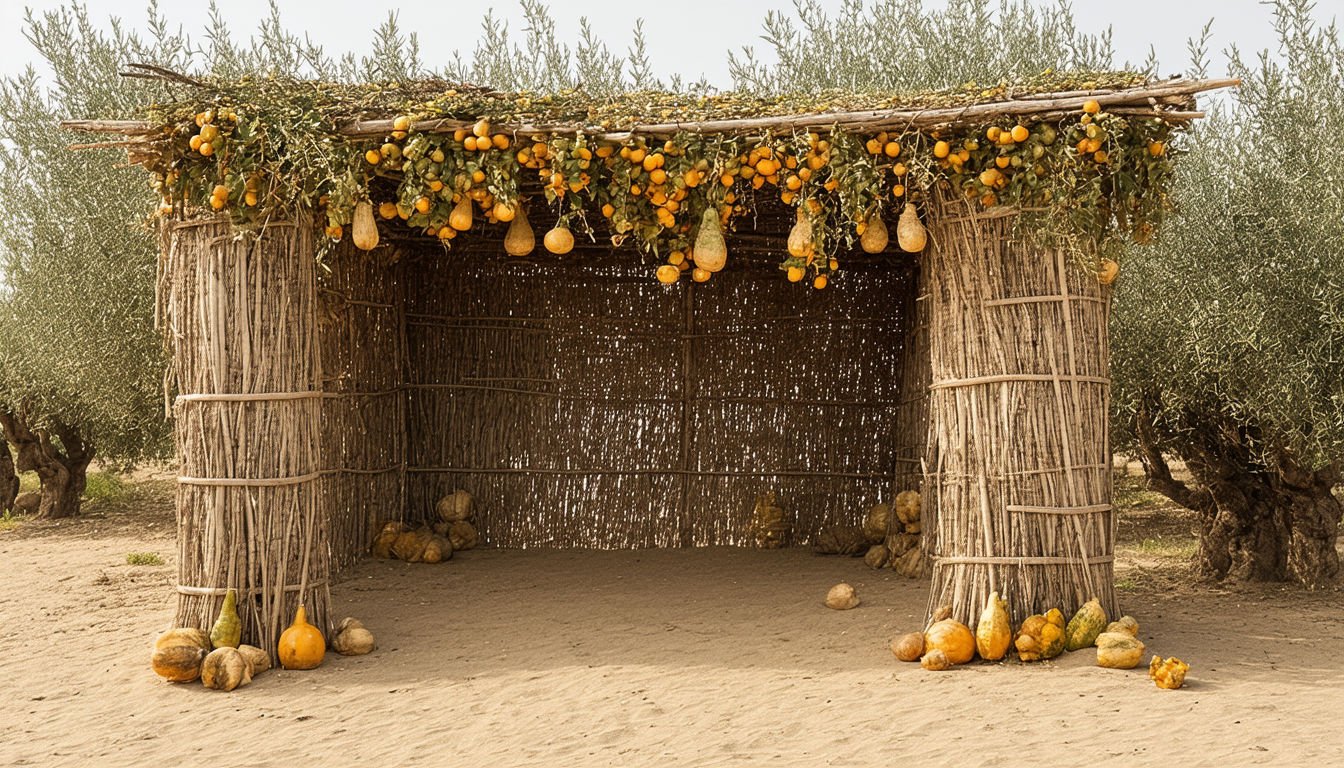
The final feast takes place fifteen days after the new moon that marks the start of the year, bringing the autumn celebrations to a close.
| TISHREI | |||||
| 10 | 11 | 12 | 13 | 14 | 15 |
| Day Of Atonement | Tabernacles 1 | ||||
36 For seven days you shall present food offerings to the Lord. On the eighth day you shall hold a holy convocation and present a food offering to the Lord. It is a solemn assembly; you shall not do any ordinary work. 37 “These are the appointed feasts of the Lord, which you shall proclaim as times of holy convocation, for presenting to the Lord food offerings, burnt offerings and grain offerings, sacrifices and drink offerings, each on its proper day, 38 besides the Lord's Sabbaths and besides your gifts and besides all your vow offerings and besides all your freewill offerings, which you give to the Lord.
The food offering is especially meaningful at this time, as the harvest for the year has been completed. Many Christians continue this tradition through various harvest festivals.
39 “On the fifteenth day of the seventh month, when you have gathered in the produce of the land, you shall celebrate the feast of the Lord seven days. On the first day shall be a solemn rest, and on the eighth day shall be a solemn rest. 40 And you shall take on the first day the fruit of splendid trees, branches of palm trees and boughs of leafy trees and willows of the brook, and you shall rejoice before the Lord your God seven days.
It is a long festival, lasting eight days, with the final day set aside for rest. The eighth day is significant in the Law as a day of dedication, when circumcision is performed on newborn boys.
| TISHREI | |||||||
| 15 | 16 | 17 | 18 | 19 | 20 | 21 | 22 |
| Feast Starts (Rest) |
Day 2 | Day 3 | Day 4 | Day 5 | Day 6 | Day 7 | Feast Ends (Rest) |
41 You shall celebrate it as a feast to the Lord for seven days in the year. It is a statute forever throughout your generations; you shall celebrate it in the seventh month. 42 You shall dwell in booths for seven days. All native Israelites shall dwell in booths,
43 that your generations may know that I made the people of Israel dwell in booths when I brought them out of the land of Egypt: I am the Lord your God.” 44 Thus Moses declared to the people of Israel the appointed feasts of the Lord.
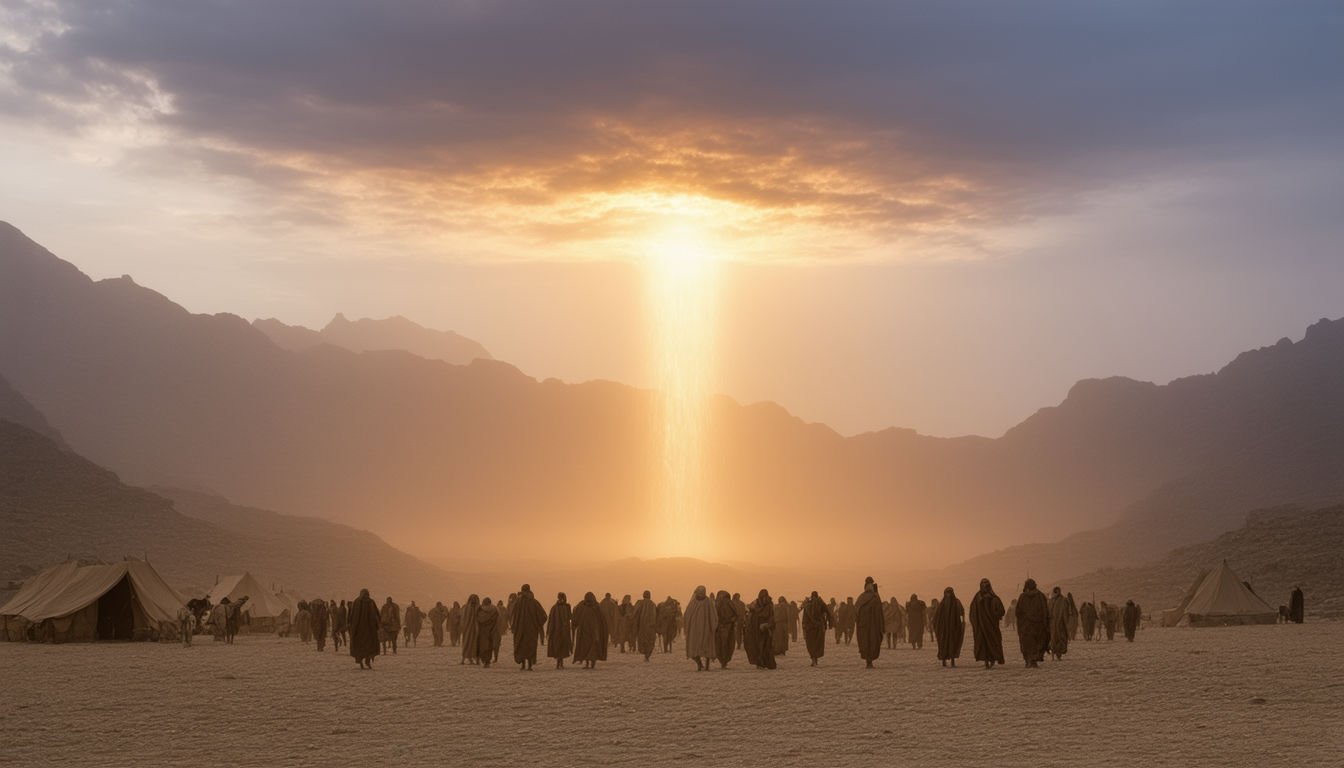
It is a feast of remembrance, celebrating all that the Lord had done for the Hebrews during their time in the wilderness. They build temporary dwellings, just as they did while journeying to the Promised Land, serving as a reminder that the Lord God traveled with them.
And the angel said to me, “Write this: Blessed are those who are invited to the marriage supper of the Lamb.” And he said to me, “These are the true words of God.”
Revelation 19:9
As Christians, we live in our temporary dwellings, our bodies and the Lord journeys with us in the form of the Holy Spirit, until we enter His rest and celebrate with Jesus at His return.
| WILDERNESS JOURNEYS | |
| HEBREWS | CHRISTIANS |
| 40 YEARS | 40 JUBILEES (almost) |
| Isrealites spent 40 years in the wildernes before getting to the Promised Land | Christians have almost spent 40 Jubilees in the Wilderness. A Jubilee equals 50 years. |
Christians have been gathering the Lord’s harvest for nearly 2,000 years. Far longer than the 40 years the Israelites spent in the wilderness. Some symmetry remains, as this period spans almost 40 Jubilees, serving as a timely reminder that we are closer than ever to the Master’s return.